
Rotational Molding vs. Blow Molding: Which Process Is Right for Your Part?
When designing a hollow plastic part, rotational molding and blow molding are often considered side by side. Both processes produce hollow products, but they are optimized for different product types, production volumes, and design requirements.
The right choice depends on factors such as tooling budget, geometry complexity, annual volume, and performance requirements.
What Are the Key Differences Between Rotational Molding and Blow Molding?
Rotational Molding
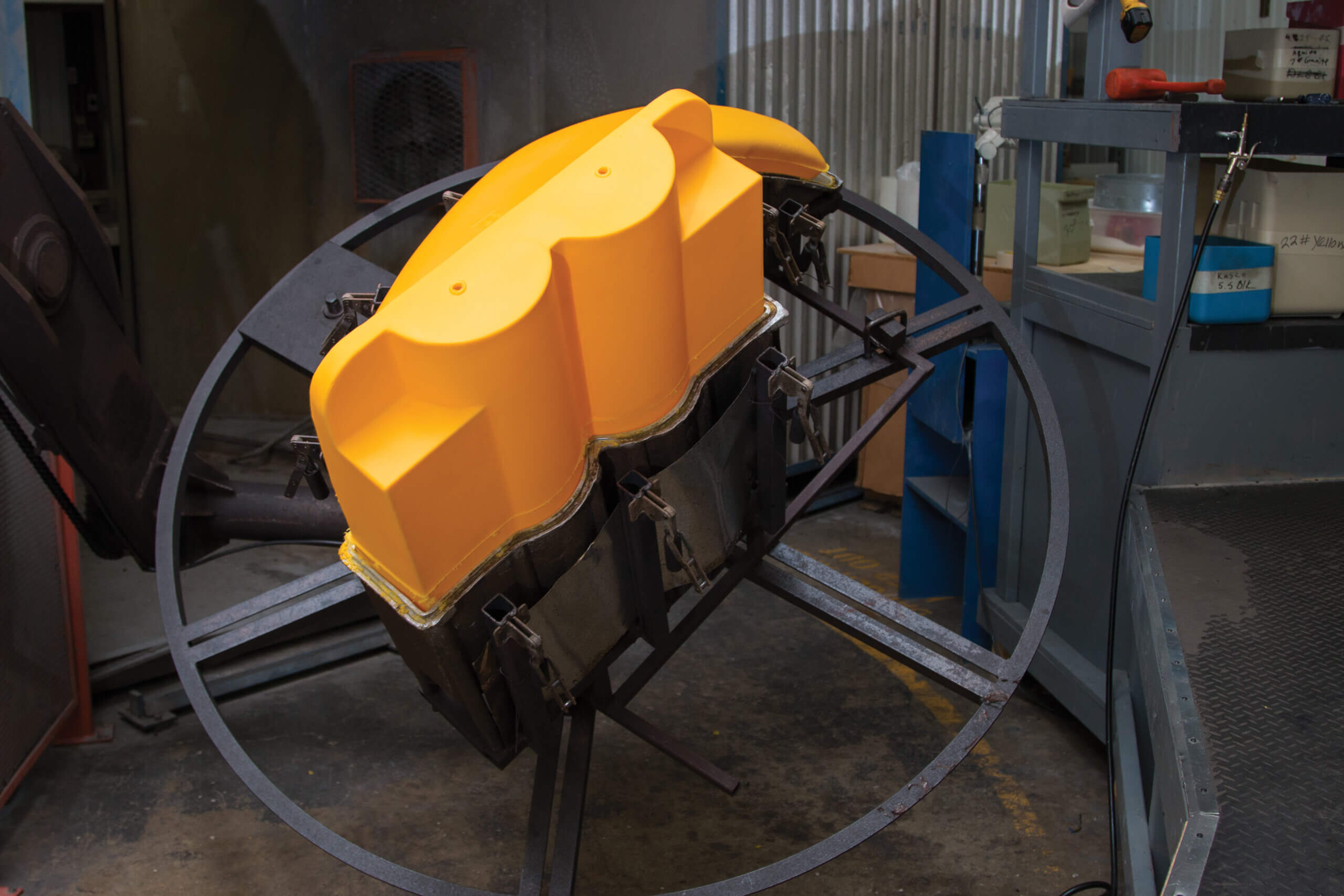
Rotational molding is a low-pressure process that creates hollow parts by slowly rotating a mold while plastic resin melts and coats the interior surface.
Key advantages include:
- Lower tooling costs
- Thicker wall sections
- Greater design flexibility
- Molded-in inserts
- Uniform wall construction
It is commonly selected for industrial and outdoor applications requiring durability.
Blow Molding
Blow molding forms a hollow product by inflating heated plastic into a mold cavity.
Key characteristics include:
- Higher tooling costs
- Faster cycle times
- Better suitability for high-volume production
- Typically thinner wall construction
- Common use for bottle-style products
Examples include bottles, drums, and many consumer packaging products.
Which Process Is Better for Different Product Types and Production Volumes?
Rotational Molding: Best For
- Large hollow products
- Tanks
- Outdoor equipment
- Custom geometries
- Durable industrial products
- Annual volumes roughly between 100 and 10,000 units
Blow Molding: Best For
- Bottles
- Drums
- Consumer packaging
- Thin-wall designs
- Very high production volumes
- Annual volumes that exceed approximately 10,000 units

How Do Tooling Costs, Part Quality, and Material Options Compare?
Tooling Costs
One of the clearest distinctions is tooling investment.
- Rotational molding tooling is significantly less expensive
- Blow molding tooling is often approximately twice the cost
This lower tooling investment can reduce risk during product launch and development.
Part Quality
Rotational molding offers several durability advantages:
- More uniform wall construction
- No welded seams
- Fewer stress concentration points
- Excellent impact resistance in demanding applications
These characteristics often make the process attractive for products exposed to rough handling or harsh environments.
Material Options
Blow molding advantages:
- Broader material selection
- Faster processing allows additional resins to be used successfully
Rotational molding limitations:
- More limited material portfolio
- Long heating cycles can restrict material options
When Should Manufacturers Choose One Process Over the Other?
Choose Rotational Molding When:
- Tooling budget matters
- Durability is a priority
- Complex geometry is required
- Molded-in inserts are desired
- Production volumes are moderate
Choose Blow Molding When:
- Production volumes are extremely high
- Thin-wall parts are required
- Material flexibility is critical
- Packaging-style products are being produced
Bottom Line
Both processes provide different advantages and disadvantages. Rotational molding often delivers the most value when products require durability, customization, and lower tooling investment. Blow molding excels when very high volumes and rapid production cycles justify a larger upfront investment. Working with an experienced manufacturing partner early in the design process can help identify the most effective solution before tooling investments are made.


