
Rotational Molding Machines: What Are They and How Do They Work?
What is a Rotational Molding Machine?
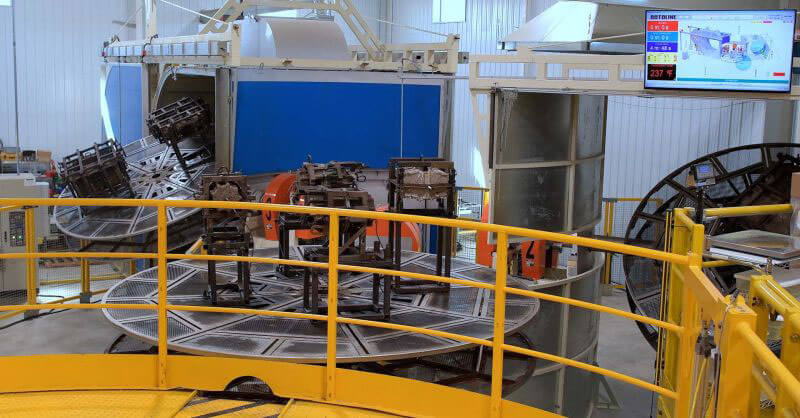
A rotational molding machine is the equipment that powers the rotomolding process. While designs vary, every machine performs the same core function: heating, rotating, cooling, and demolding a hollow plastic part.
How Does a Rotational Molding Machine Work?
Step 1: Loading
Powdered resin is loaded into a mold and the mold is closed.
Step 2: Heating
The mold enters an oven while rotating on multiple axes. Most commonly at a 4:1 major to minor axis ratio.
As the mold heats:
- Resin adheres to the interior surface
- Material builds layer by layer
- Layers fuse into a homogeneous wall structure
Step 3: Cooling
The mold continues rotating while cooling.
Depending on application requirements, cooling may involve:
- Ambient air
- Forced air
- Water mist systems
Step 4: Demolding
Once cooled:
- The mold is opened
- The finished part is removed
- The mold is reloaded for the next cycle
A typical production cycle may include:
- Approximately 20 minutes heating
- Approximately 20 minutes cooling
- Approximately 20 minutes demolding and reloading
The process operates at ambient pressure and does not require high-pressure injection systems.
What Are the Different Types of Rotational Molding Machines?
Carousel Machines
Characteristics:
- Most common machine type
- Three or four arms
- Continuous production flow
- Dedicated heating, cooling, and demolding stations
Often the preferred choice for ongoing production environments.
Shuttle Machines
Characteristics:
- “Shuttle” moves between stations (Oven and Cooling)
- Return to central loading area
- Useful for specialized production environments
Rock-and-Roll Machines
Characteristics:
- Simultaneous rocking and rotation
- Frequently used for tanks
- Common choice for open-top products
Clamshell Machines
Characteristics:
- Heating and cooling occur in one location
- Single-unit design
- Commonly used for lower-volume operations

Bottom Line
The right rotational molding machine helps turn a part design into a repeatable manufacturing process, but experience is what brings everything together. From tooling and material selection to process control and production planning, working with an experienced rotational molder can help identify opportunities to improve performance, manage costs, and avoid common design challenges. For OEMs developing durable plastic components, a collaborative manufacturing partner can provide valuable guidance throughout the product development journey, helping move from concept to production with greater confidence.


